


Creatine has a branding problem with women, and it has nothing to do with the science. Most creatine marketing is aimed at men chasing size, which leads many women to assume it is not for them, or that it will make them bulky. Neither holds up. Here is what the research does show, and where it falls short.
The Bulking Myth
Creatine does not cause fat gain. It raises the phosphocreatine stored in your muscles, which they use to rebuild their immediate fuel, ATP, during short, hard efforts like lifting a heavy weight or sprinting. Any muscle you add comes from the training you do. Your training does the work, and creatine supports it.
Creatine can add a small amount of water inside your muscle cells in the first few weeks. That water sits inside the muscle. It is not the puffy, under-the-skin look people associate with bloating.
What the Research Shows in Women
Women tend to start with lower creatine stores. A 2021 review of creatine across women's lives notes that women generally have lower creatine stores than men (Smith-Ryan et al., 2021). Diet plays a part, since most dietary creatine comes from meat and fish.
Strength and performance. The same review concluded that before menopause, creatine appears to improve strength and exercise performance in women, and that women after menopause may also see benefits in muscle function (Smith-Ryan et al., 2021). In older adults generally, people who took creatine while strength training gained more chest press and leg press strength than people who trained alone (Devries and Phillips, 2014).
Bone density: the honest answer. You may have read that creatine protects your bones after menopause. A two-year trial followed 237 postmenopausal women on a supervised exercise program and found that creatine did not change bone mineral density compared with a placebo (Chilibeck et al., 2023). The women taking creatine did walk faster on an 80-meter walking test. We will not sell creatine as a bone supplement, because the best evidence we have does not support that.
Still being studied. Researchers are also looking at creatine across the menstrual cycle, through menopause, and for brain health. Those questions are not settled, so we do not make claims about them.
The Dose Is the Same
There is no female-specific creatine dose. The standard daily amount is 3 to 5 grams of creatine monohydrate, and steady daily intake fills muscle stores over three to four weeks without a loading phase (Buford et al., 2007). PeakFusion is 5 grams per scoop.
There is also no need for a "women's creatine" product. Creatine monohydrate is creatine monohydrate. A version with a different label, added ingredients, or a higher price is a packaging decision, not a scientific one.
What to Actually Expect
- Training does the work. Creatine supports it, mostly in short, hard efforts like lifting.
- No fat gain and no bulk beyond what your training builds.
- Possibly a small amount of water weight in the first few weeks, held inside the muscle.
- The same 3 to 5 gram daily dose used for men, taken every day.
- A long safety record. The International Society of Sports Nutrition concludes that short and long-term use, up to 30 grams a day for five years, is safe and well tolerated in healthy people (Kreider et al., 2017).
Who Should Check With a Doctor First
If you are pregnant or breastfeeding, have a kidney condition, or take prescription medication, talk with your doctor before starting creatine or any supplement. PeakFusion creatine is for adults 18 and older.
The Bottom Line
Creatine monohydrate is one of the most studied supplements there is, and nothing in the research calls for a different product or a different dose for women. It supports strength training. It will not make you bulky. And where the evidence is weak or negative, as it is for bone density, we would rather tell you than sell around it.
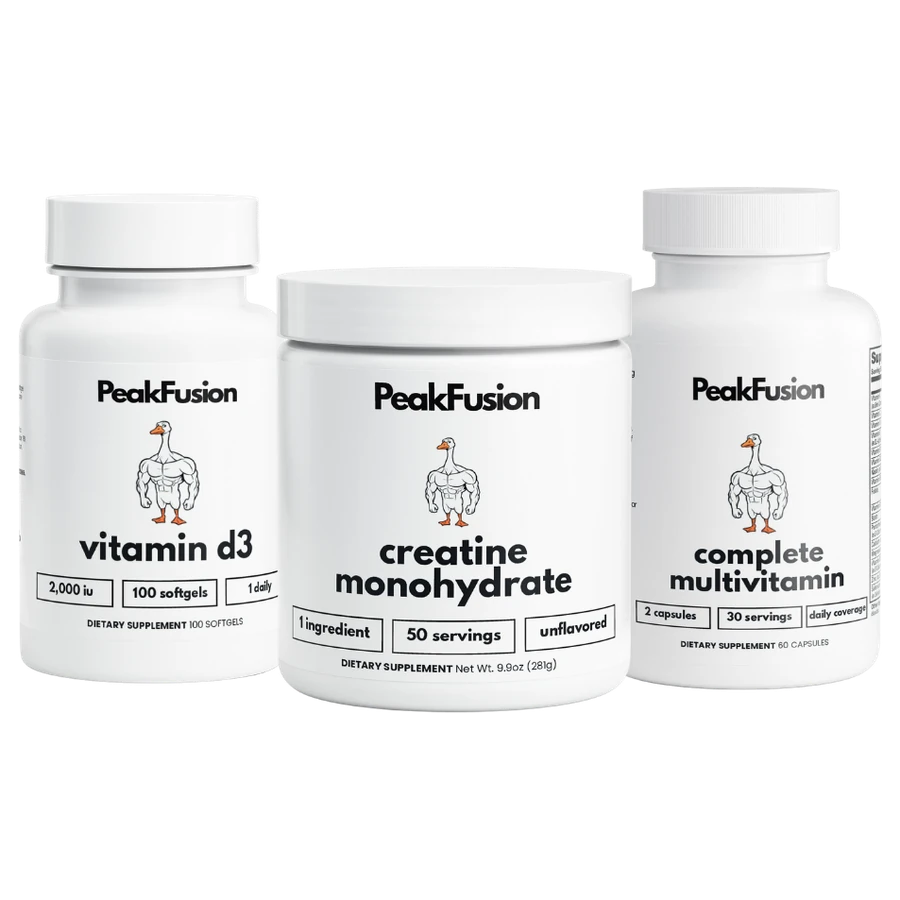
PeakFusion Creatine Monohydrate is 5 grams per serving, unflavored, micronized for easy mixing, and independently tested at 100.8% assay on Lot B25I013. One formula. No gendered marketing. The product page is here.
For more on what to expect and when, read how long creatine actually takes to work.
PeakFusion supplements are not intended to diagnose, treat, cure, or prevent any disease. Consult a healthcare provider before beginning any supplement, especially during pregnancy or breastfeeding.


