

Does creatine make you bloated is one of the most common reasons people hesitate before starting the most researched supplement in sports nutrition. The concern is understandable. Nobody trains hard to end up looking soft or feeling puffy. The short answer is that creatine does not cause the kind of bloating most people are picturing. It does cause a form of water retention, but that water goes into your muscle cells, not under your skin, and the two are very different things.
Two Different Things Get Called "Bloating"
When people say creatine made them bloated, they usually mean one of two things, and it helps to separate them:
A puffy, swollen appearance. The fear that creatine adds a smooth, watery layer under the skin that hides muscle definition.
Stomach discomfort. A feeling of fullness, gas, or mild cramping, usually in the first week of use.
The research treats these separately, because they have different causes and different solutions. Neither one describes creatine the way the myth suggests.
Where the Water Actually Goes
Creatine works by increasing the amount of phosphocreatine stored in your muscles, which helps regenerate energy during short, intense efforts. Creatine is stored inside muscle cells, and it pulls water in with it. This is called intracellular water retention, and it is the mechanism behind the small, fast weight gain many people see in the first week or two.
That distinction matters. Subcutaneous water, the kind that sits between your skin and your muscle, is what creates a puffy, soft look. Creatine does not preferentially draw water there. It draws water into the muscle itself, which tends to make muscle look fuller, not softer. Studies measuring the body's water compartments have generally found that creatine increases intracellular water without a meaningful shift toward the subcutaneous, under-the-skin space.
The Early Weight Gain Is Water, Not Fat or Bloat
Most people gain roughly one to three pounds in the first week or two of creatine use. This is water moving into muscle tissue. It is not fat, and it is not the same as feeling bloated. It stabilizes quickly and does not keep climbing. For most athletes it shows up as slightly heavier, fuller muscles rather than any visible puffiness. If you train for a sport where fuller, better-hydrated muscle is an advantage, which is most strength and power sports, this is working in your favor.
The Loading Phase Is the Real Culprit
Here is where most genuine bloating complaints come from. The classic creatine loading protocol has you take around 20 grams per day, split into four doses, for five to seven days. Taking that much creatine at once pulls water into the digestive tract and can cause the fullness, gas, and mild cramping people describe as bloating. It is a gut response to a large dose, not a permanent side effect of creatine itself.
The fix is simple: you do not need to load. Taking a steady 5 grams per day reaches full muscle saturation in about three to four weeks with none of the digestive load. You give up a few weeks of speed and avoid almost all of the discomfort. We covered that timeline in detail in how long creatine actually takes to work.
Powder Quality Changes How It Feels
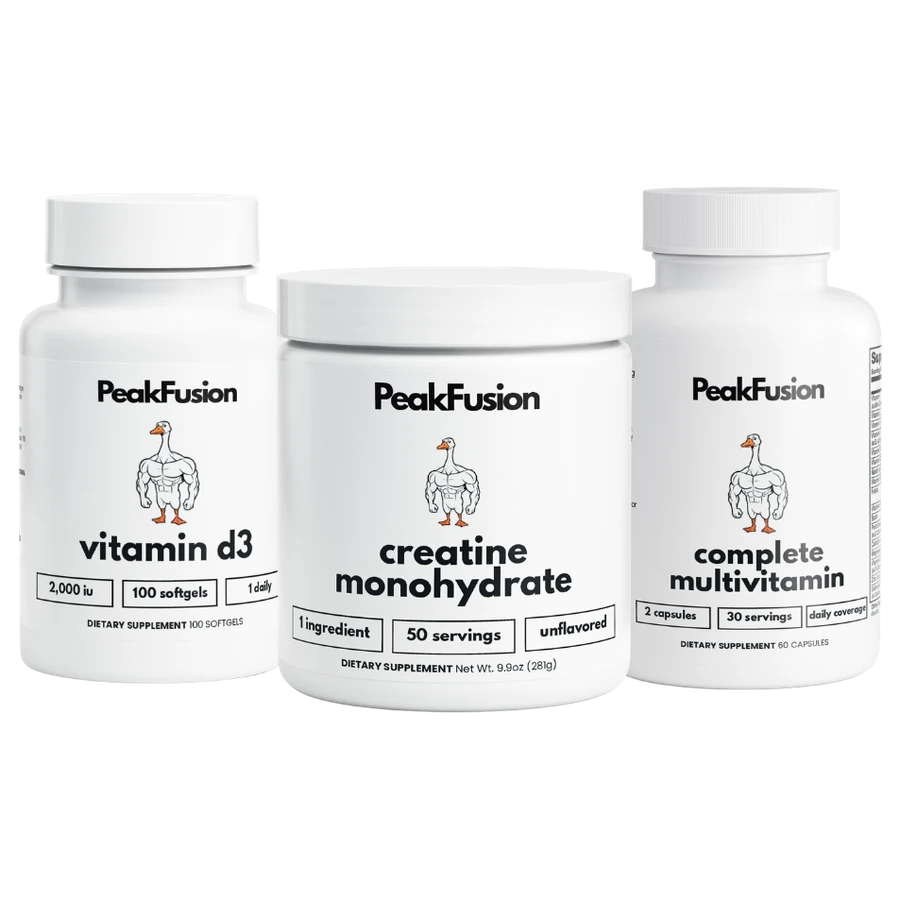
Not all creatine dissolves the same way. Coarse, poorly milled creatine settles into grit at the bottom of the glass, and undissolved particles are more likely to sit in the stomach and cause discomfort. Micronized creatine is processed to a smaller particle size so it disperses more evenly in liquid, which improves mixing and tends to be easier on digestion. PeakFusion Creatine Monohydrate is micronized for exactly this reason.
How to Avoid Bloating Entirely
If you want the performance benefit of creatine without any of the discomfort, the approach is straightforward:
Skip the loading phase. Take 5 grams per day from the start. Saturation still happens, just over a few weeks instead of a few days.
Dissolve it fully. Mix it into plenty of water or your usual drink, and give micronized powder a few extra seconds to disperse.
Take it with adequate fluids. Creatine draws water into muscle, so staying well hydrated supports the process and reduces any gut discomfort.
Be consistent. Daily timing matters more than the specific time of day. A single 5 gram dose, taken whenever fits your routine, is all most people need.
The Bottom Line
Creatine does not cause the puffy, under-the-skin bloating the myth describes. The water it retains goes into muscle cells, which makes muscle look fuller, not softer. The early weight gain is intramuscular water and it levels off within weeks. The genuine bloating some people feel comes almost entirely from high-dose loading, and it disappears when you skip loading and take a steady 5 grams a day of a well-milled, micronized powder.
If concern about bloating has kept you off creatine, the research does not support it as a reason to avoid one of the safest, most effective supplements available.
PeakFusion Creatine Monohydrate delivers 5 grams per serving, unflavored and micronized, and independently tested at 100.8% assay on Lot B25I013. No loading required, no proprietary blends. The product page is here.
For more on getting the most out of creatine, read how long creatine takes to work and whether creatine actually causes hair loss.
PeakFusion supplements are not intended to diagnose, treat, cure, or prevent any disease. Consult a healthcare provider before beginning any supplement protocol.