

Almost every supplement bottle says something like "third-party tested" on it. Very few of those brands will show you the actual report. The report is called a Certificate of Analysis, and once you know how to read one, you can tell in about thirty seconds whether a brand is telling you the truth.
Here is how to do it, using our own reports as the example.
First, why this matters at all
Supplements do not need FDA approval before they go on sale in the United States. The FDA can act after a product turns out to be unsafe or mislabeled, but nobody checks the contents in advance.
That leaves one real check: an independent lab, with no financial stake in the brand, confirming what is actually in the bottle. That report is the COA.
Step 1: find the lot number, and match it to your bottle
This is the step almost nobody does, and it is the one that matters most.
A COA describes one production run. Not the product in general. One run. Every batch gets its own lot number, printed on the bottle, and its own set of test results.
So the question is not "does this brand publish COAs." It is "does the COA match the bottle in my hand." If a brand publishes a report from a lot that stopped shipping a year ago, that report tells you nothing about what you just bought.
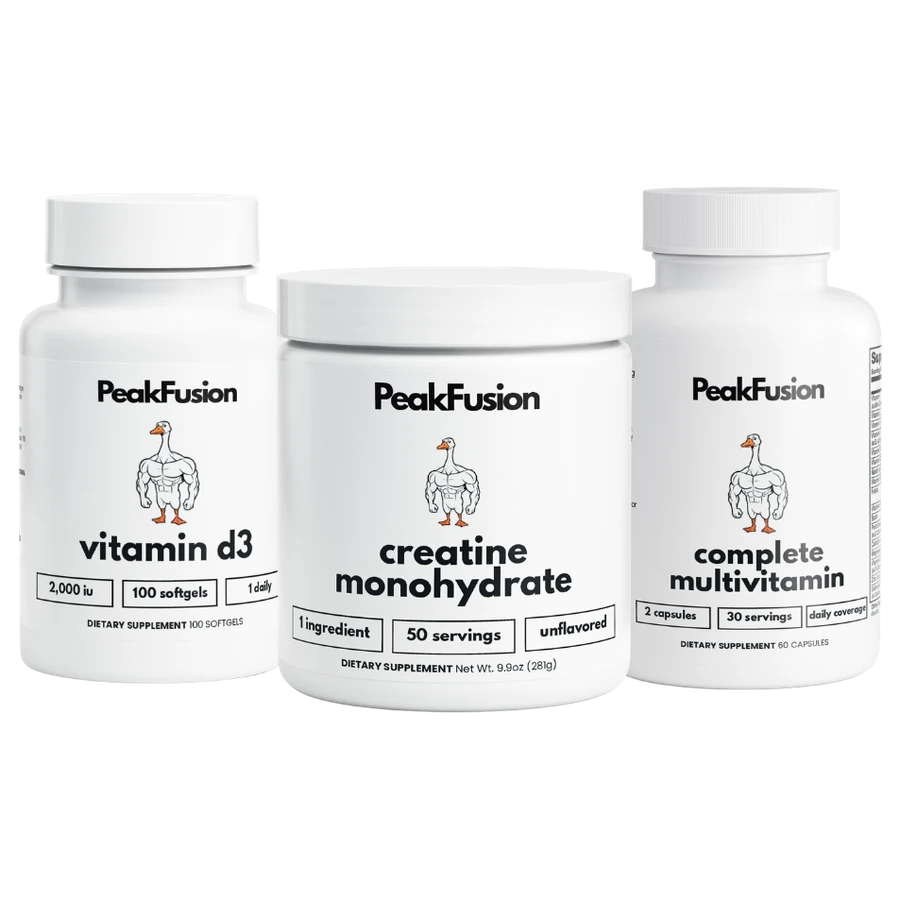
Our creatine currently ships as lot B25I013. Our multivitamin is MMV250805. Our vitamin D3 is VS240798. Those numbers are on the bottles and on the lab results page, and older lots stay published in an archive there rather than getting deleted.
Step 2: read the assay
Assay is the number that tells you how much of the active ingredient the lab actually found, compared to what the label claims.
Our creatine tested at 100.8% against a 99.9% minimum specification. In plain terms, the lab found slightly more creatine than the label promises.
What you are looking for is a number at or above 100%. Below that means the bottle contains less than it says. This is where under-dosing shows up, and it is the single most useful number on the page.
One honest note: not every product has an assay on every lot. Our current D3 lot has heavy-metals documentation but no potency assay yet, so we say that plainly on the lab results page instead of reusing an older lot's number. A brand that shows you a gap is being more careful with you than one that fills it in.
Step 3: check the heavy metals
Look for four: lead, arsenic, cadmium, and mercury. These occur naturally in soil and can concentrate in plant-derived ingredients, so the question is never whether they are present, it is whether they are below the limits.
A good COA gives you the measured amount and the specification it was tested against. Our multivitamin lot MMV250805 came in at 0.144 ppm lead, 0.114 ppm arsenic, 0.065 ppm cadmium, and mercury below the limit of quantification. All well under California Prop 65 and FDA daily-intake limits.
If a report just says "pass" with no numbers and no limits, that is weaker. Not useless, but weaker.
Step 4: check the microbiological panel
This is the boring section people skip. It screens for E. coli, Salmonella, Staphylococcus aureus, yeast, and mold. You want to see "absent" or "negative" on the pathogens and low counts on the rest.
It matters most for powders and anything with botanical ingredients, which have more surface area for contamination.
Step 5: check who did the testing
The lab should be independent, meaning no financial relationship with the brand. In-house testing is not worthless, but it is not the same thing, and a brand that only tests its own products is grading its own homework.
Also look at the method. HPLC and liquid chromatography for potency. ICP-MS for heavy metals. These are standard analytical methods, and seeing them named is a good sign.
The thirty second version
- Does the lot number on the report match the lot number on your bottle?
- Is the assay at or above 100% of the label claim?
- Are all four heavy metals listed with numbers and limits?
- Are the pathogens listed as absent or negative?
- Was it an outside lab, and are the methods named?
If you cannot answer question one, the rest does not matter much.
What to do if a brand will not show you
Ask. A lot of brands will send a COA by email if you request it, and the response itself tells you something. If they send a report from a lot that does not match your bottle, or they send nothing, you have your answer.
Our reports are on the lab results page. Lot numbers, test dates, methods, and full results, including the lots we no longer ship. You can check them against a bottle before you ever buy one.
These statements have not been evaluated by the Food and Drug Administration. This product is not intended to diagnose, treat, cure, or prevent any disease.