


updated october 2026
yes, you can take a multivitamin with your morning coffee. the common advice to keep vitamins and coffee an hour apart is built around iron, and the peakfusion complete multivitamin does not contain iron. the one real consideration is calcium, where caffeine reduces absorption by a small amount, not enough to change how you take two capsules with breakfast.
why this advice exists in the first place
the "don't take your vitamins with coffee" rule comes from iron research. coffee and tea contain polyphenols, plant compounds that bind to non-heme iron (the form found in plants and most supplements) and make it harder for your gut to absorb. the nih office of dietary supplements confirms the mechanism directly, listing polyphenols among the known inhibitors of non-heme iron absorption, alongside calcium and certain compounds in grains and legumes.
that advice makes sense for a multivitamin built around iron. it does not automatically apply to every multivitamin on the shelf, because not every multivitamin contains iron. a lot of generic advice online talks about "multivitamin" as one single product, when supplement facts panels actually vary a great deal between brands, between a men's formula and a women's formula, and between a general multivitamin and one built for athletes. the only way to know whether a specific interaction applies to you is to check your own label, not a blanket rule written for a different product.
what's actually in the peakfusion complete multivitamin
the complete multivitamin covers twenty vitamins and minerals in two capsules: the full b-vitamin complex (b1, b2, b3, b5, b6, b12, folate, biotin), vitamins a, c, and e, vitamin d and calcium, zinc and selenium, and a set of trace minerals (magnesium, copper, manganese, chromium, molybdenum). iron is not one of them. it is formulated this way for the same reason many adult and athlete-focused multivitamins skip it: most adults who eat a typical diet get enough iron from food, and taking in more than you need has its own downsides.
practically, that means the specific interaction behind the coffee-and-vitamins advice does not apply to this product. you are not blocking iron absorption with your coffee, because there is no iron in the capsule to block. the full supplement facts panel, with every ingredient and amount, is listed on the product page and the lab results page, so you can check it against whatever you've read elsewhere rather than take this article's word for it either.
the one nutrient where caffeine does matter: calcium
the complete multivitamin does contain calcium, paired with vitamin d, and this is where caffeine has a documented, if modest, effect. the nih office of dietary supplements states plainly that net absorption of dietary calcium is reduced to a small extent by intakes of caffeine, alongside phosphorus and vitamin d intake. "small extent" is the operative phrase. this is not a reason to separate your coffee and your multivitamin by an hour. it is a reason not to rely on caffeine-heavy drinks as your only source of calcium, and to let your overall diet carry the rest of the load.
why timing with food matters more than timing with coffee
the bigger factor for this product isn't caffeine, it's fat. several of the vitamins in the complete multivitamin, including a, d, and e, are fat-soluble, meaning your body absorbs them better when there's some dietary fat in your stomach at the same time. that's why the product's own suggested use is two capsules with breakfast: not because of coffee, but because breakfast (eggs, oatmeal with milk, yogurt, nut butter) usually has at least some fat in it, and a vitamin taken on a completely empty stomach doesn't get that assist.
so the actionable version of "when should i take this" isn't about your coffee cup. it's about whether your breakfast has anything in it besides black coffee itself.
coffee, multivitamin, and a quick comparison
| concern | does it apply to this multivitamin | what to do about it |
|---|---|---|
| coffee blocking iron absorption | no, this formula has no iron | nothing to change |
| caffeine reducing calcium absorption | yes, to a small extent per nih | don't rely on coffee as a calcium source; otherwise no change needed |
| fat-soluble vitamins (a, d, e) absorbing poorly on an empty stomach | yes, this is the real timing factor | take with breakfast that includes some fat, coffee or no coffee |
| water-soluble b vitamins and vitamin c | absorbed independent of fat; no meaningful coffee interaction documented | nothing to change |
what this looks like in practice
two capsules with breakfast, coffee in hand or not. if your breakfast is just black coffee and nothing else, that's more of a "no food" problem for the fat-soluble vitamins than a coffee problem specifically. add something with a little fat (eggs, greek yogurt, peanut butter toast) and the timing question mostly resolves itself.
every production lot of the complete multivitamin is independently tested before it ships, with the full report published by lot number on our published lab reports, so you can see exactly what's confirmed in what you're taking rather than taking a label's word for it.
frequently asked questions
does coffee cancel out my multivitamin?
no. coffee does not "cancel out" a multivitamin. it can modestly reduce absorption of specific nutrients it interacts with, mainly non-heme iron and, to a smaller degree, calcium. since this multivitamin doesn't contain iron, that part of the concern doesn't apply here, and the calcium effect is minor.
should i wait an hour after coffee to take my vitamins?
that advice is built for iron-containing supplements. with the complete multivitamin, there's no strong reason to wait. taking it with breakfast, whether or not that breakfast includes coffee, is the simpler and more useful habit to build.
does the trinity stack have the same answer?
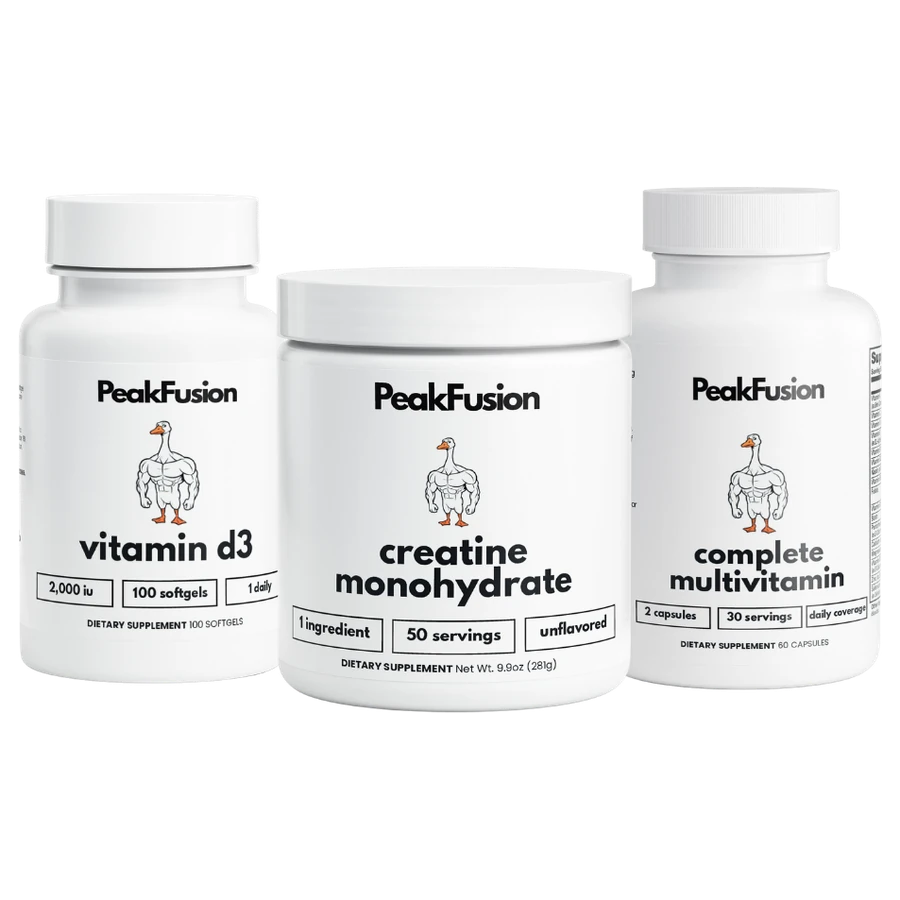
yes. the trinity stack pairs the complete multivitamin with creatine and vitamin d3, and the same logic applies to the multivitamin portion of that routine. creatine and caffeine have their own separate question, covered in can you take creatine and caffeine together.
what if my multivitamin does contain iron?
if you're taking a different multivitamin that does list iron on the label, the classic advice holds: separate it from coffee or tea by an hour or so, since that's where the polyphenol-iron interaction is actually documented.
does taking it with coffee affect how it was tested?
no. third-party testing happens on the product itself, lot by lot, before it ever reaches you. how you take it at home doesn't change what's in the capsule; it only affects how much of certain nutrients your body absorbs in that sitting.
shop this
complete multivitamin: $28.90 a month with subscribe and save (15% off), or $34 one-time. shop the complete multivitamin.
want all three daily basics at once? the trinity stack (creatine, multivitamin, and vitamin d3) is $85 one-time and ships free. it's the simplest way to start; the trinity stack itself doesn't carry a subscription, so once you've tried it, subscribe to each product individually and each one refills on its own schedule. shop the trinity stack.
orders of $75 or more ship free in the u.s.
this article is general information, not medical advice. talk to a doctor before starting any new supplement if you are pregnant, nursing, under 18, or managing a health condition.


