


Yes, most people can take creatine and caffeine together, including in the same cup of coffee. The caution that gets repeated online traces back to one small 1996 study that paired caffeine with a creatine loading protocol, a much larger dose than the standard daily serving most people, including PeakFusion customers, actually take. Here is what that study found, what more recent research shows, and when the timing actually matters.
Where this concern came from
In 1996, a team led by Vandenberghe gave nine healthy men either a placebo, creatine alone, or creatine plus caffeine for six days. The creatine dose was a loading dose, 0.5 grams per kilogram of body weight per day, which works out to roughly 35 to 40 grams a day for most adults. The caffeine dose was 5 milligrams per kilogram per day, around 350 to 400 milligrams for a 175-pound person, taken every day alongside the creatine, not just before a workout.
Creatine alone raised dynamic torque production, a measure of how much force the muscle could produce, by 10 to 23 percent. Creatine plus caffeine produced no such increase. Muscle phosphocreatine, the fuel creatine replenishes, rose by a similar amount in both groups, so the caffeine did not block creatine from getting into the muscle. It appeared to block creatine from translating into more strength. The study's own conclusion was blunt: caffeine eliminated creatine's performance benefit in that group (Vandenberghe et al., Journal of Applied Physiology, 1996).
Why that result stuck around
One proposed mechanism, from a follow-up study by Hespel and colleagues in 2002, is that creatine and caffeine pull muscle relaxation time in opposite directions: creatine shortens it, caffeine lengthens it, and the two together land somewhere in between, which could blunt the net benefit. Gastrointestinal discomfort from combining the two has also been floated as a factor. Neither explanation is confirmed. Both are reasonable guesses for a result that has been difficult to fully explain since 1996.
What more recent research shows
A single 30-year-old study with nine participants is a thin foundation to build a permanent rule on, and later research has not consistently backed it up.
| Finding | What it suggests |
|---|---|
| Caffeine taken after a creatine loading phase (not during it) improved performance over creatine alone | The timing of caffeine relative to loading, not just the combination itself, may be what matters |
| Creatine, creatine with caffeine anhydrous, and creatine with coffee all produced similar results in one trial | Coffee specifically does not appear to carry a unique penalty |
| A smaller, underpowered trial found creatine plus a lower caffeine dose did not match creatine alone on one muscle-thickness measure | A real effect at some dose cannot be ruled out, but this result is not strong enough to confirm one |
The pattern across this later research: any interference effect looks specific to a creatine loading protocol combined with a fairly high, daily caffeine dose, not to ordinary creatine and coffee use. (Examine.com's review of the caffeine-creatine literature lays out each of these studies in more depth, including the ones summarized above.)
Does this apply to the dose you actually take
Almost certainly not, for one simple reason: the studies above that found a problem were testing a loading phase, not a standard daily dose. PeakFusion's own suggested use is 3 to 5 grams of creatine a day, with water, coffee, or any drink, no loading phase, reaching full muscle saturation over 3 to 4 weeks of consistent daily use instead of a few days of a much larger dose. That is also the dosing most current research supports as the baseline, loading or not. Every study that reported caffeine blunting creatine's benefit used a loading-style dose several times higher than that. PeakFusion's creatine is third-party tested lot by lot, with the current results published on the lab results page, which is a separate question from the caffeine timing covered here but worth checking regardless of how you take your daily dose.
If you are not loading, which is the PeakFusion-recommended approach and the one most people actually follow, there is no published result showing your morning coffee is working against your daily scoop.
The bigger picture: creatine supports training, it does not replace it
It is worth stepping back from the caffeine question for a moment. Creatine's actual, well-established role is supporting the muscle's short-term energy supply during repeated hard efforts, the kind of training stress that builds strength over weeks and months. It does that whether or not caffeine is involved. Nothing about the caffeine research above changes that basic mechanism or turns creatine into something it is not. The torque and strength numbers in these studies were measured during real exercise testing, not produced by the supplement sitting in a bottle. Training drives the results. Creatine, taken consistently, supports the training that produces them.
That is also why the loading-phase question matters less than it used to. Most of today's research, including PeakFusion's own suggested use, points to a simple daily dose over weeks as the practical path to full muscle saturation, which sidesteps the entire caffeine-interaction question rather than requiring you to manage around it.
If you want to be cautious anyway
- Skip a loading phase. It is not required for creatine to work, and it is the specific scenario where a caffeine interaction has been reported.
- Take your daily creatine dose with whatever drink is easiest to stick with. Consistency day to day matters more than the clock, which is also the whole logic behind subscribing instead of buying one tub at a time, since running out mid-month breaks the daily habit more than any timing question does.
- If you drink multiple cups of coffee and want to separate the two out of caution, take creatine at a different time of day than your largest caffeine dose. This is a preference, not a requirement supported by strong evidence at ordinary doses.
Frequently asked questions
Will coffee stop my creatine from working?
No published study shows this at a standard daily dose with no loading phase. The interference reported in older research was specific to a creatine loading protocol paired with a high, daily caffeine dose.
Does creatine mixed directly into coffee cause stomach issues?
One trial found that caffeine powder caused gastrointestinal discomfort in roughly 30 to 40 percent of participants, while the same caffeine dose from coffee did not cause the same issue in that trial. Coffee itself was not the problem.
Should I avoid caffeine specifically on days I load creatine?
If you choose to run a loading phase, which PeakFusion does not require, keeping caffeine lower on those specific days is a reasonable precaution based on the available research. It is not necessary once you are on a standard maintenance dose.
How much caffeine is in my coffee anyway?
The FDA puts regular brewed coffee at roughly 95 to 200 milligrams of caffeine per 12-ounce cup, and generally considers up to 400 milligrams a day not associated with negative effects for most healthy adults. One or two cups a day with your usual creatine scoop is well under the doses used in the studies above.
Does this apply to pre-workout products with both creatine and caffeine in them?
Most combination pre-workouts use a single caffeine dose timed before training rather than daily caffeine alongside a creatine loading phase, which is a different pattern than the one studied in 1996. PeakFusion's creatine is unflavored and sold on its own, so this question is more relevant to other products than to how PeakFusion is meant to be used. If a multivitamin is also part of your morning, multivitamin and coffee covers that combination directly.
Shop this
Micronized Creatine Monohydrate: $34 one time, or $28.90 with Subscribe and Save, delivered every 7 weeks.
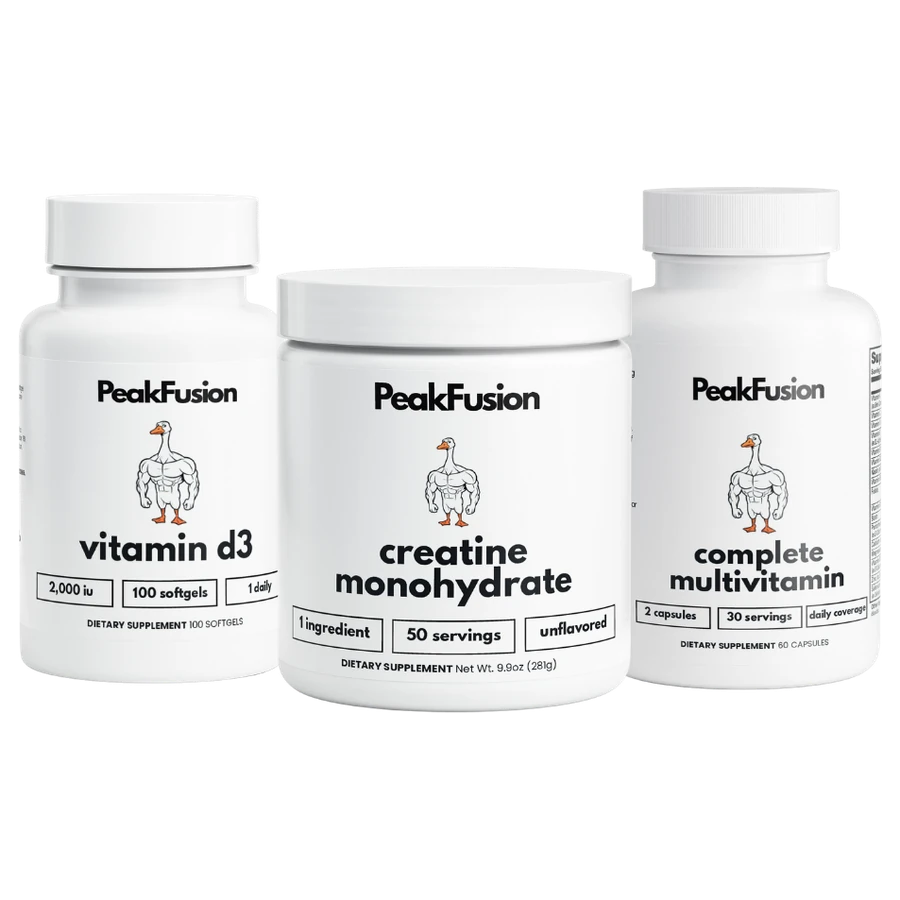
The Trinity Stack: $85 one time, includes creatine, the Complete Multivitamin, and the Vitamin D3 softgel, and clears the $75 free shipping threshold. The Trinity Stack is a one-time purchase only. Subscribe to each product individually afterward if you want ongoing refills.
This article is general information, not medical advice. Talk to a doctor before starting or combining supplements if you are pregnant, nursing, under 18, or managing a health condition.


