


Creatine and hair loss is one of the most searched questions in sports nutrition, and one of the most misunderstood. The short answer: no study has shown that creatine causes hair loss, and the one trial that measured hair directly found no difference from a placebo. The longer answer involves one small 2009 study, a hormone called DHT, and a 2025 trial that finally tested the question head on.
Where the Concern Comes From: The 2009 DHT Study
The worry traces back to a 2009 study of 20 college-aged rugby players in South Africa (van der Merwe et al., 2009). Each player went through a creatine phase and a placebo phase, with a six-week break in between. The creatine phase started with a high loading dose of 25 grams a day for a week, followed by 5 grams a day for two weeks. After the loading week, blood levels of dihydrotestosterone (DHT) were 56% higher than at the start, and they were still 40% above baseline after the two lower-dose weeks. Testosterone itself did not change.
DHT is made from testosterone. In men who are genetically prone to pattern hair loss, DHT can shrink hair follicles over time, which is why some hair loss treatments work by blocking DHT. That is the whole chain behind the myth: creatine raised DHT in one study, and DHT is involved in pattern hair loss.
Why That Study Does Not Settle It
It was small. Twenty people is a small sample, and small studies are more likely to turn up chance findings.
It used a heavy loading dose. The biggest DHT jump came after a week at 25 grams a day, five times the standard daily dose.
It never measured hair. The study measured blood hormones, not hair loss, hair density, or follicles. "DHT went up" turned into "creatine causes hair loss" without anyone looking at hair.
The 2025 Trial That Measured Hair
In 2025, researchers ran the study the 2009 paper never did (Lak et al., 2025). Forty-five resistance-trained men aged 18 to 40 were randomly assigned to 5 grams of creatine a day or a placebo for 12 weeks, and 38 finished. The researchers measured DHT, the DHT-to-testosterone ratio, and hair itself, including hair density, follicle counts, and hair thickness. Creatine made no difference to any of them compared with the placebo. The authors concluded that their results provide strong evidence against the claim that creatine contributes to hair loss.
What the Broader Research Shows
Creatine monohydrate is one of the most studied supplements in sports nutrition, with several hundred peer-reviewed studies behind it (Buford et al., 2007). The International Society of Sports Nutrition concludes that short and long-term use, up to 30 grams a day for five years, is safe and well tolerated in healthy people (Kreider et al., 2017).
Who Might Still Want to Ask a Doctor
If pattern baldness runs strongly in your family and you want to be cautious, it is reasonable to talk with a dermatologist before starting creatine. That is a personal call, not a sign that the evidence points toward harm.
If you are noticing more shedding, the timing may be a coincidence. Pattern hair loss often starts to show in your twenties or thirties, the same years many people start training seriously and taking supplements. A dermatologist can check for the usual causes.
The Bottom Line
No study has shown that creatine causes hair loss. One small 2009 study found a rise in DHT during a heavy loading phase and never looked at hair. The 2025 trial that did look at hair, at the standard 5 grams a day, found no difference from a placebo.
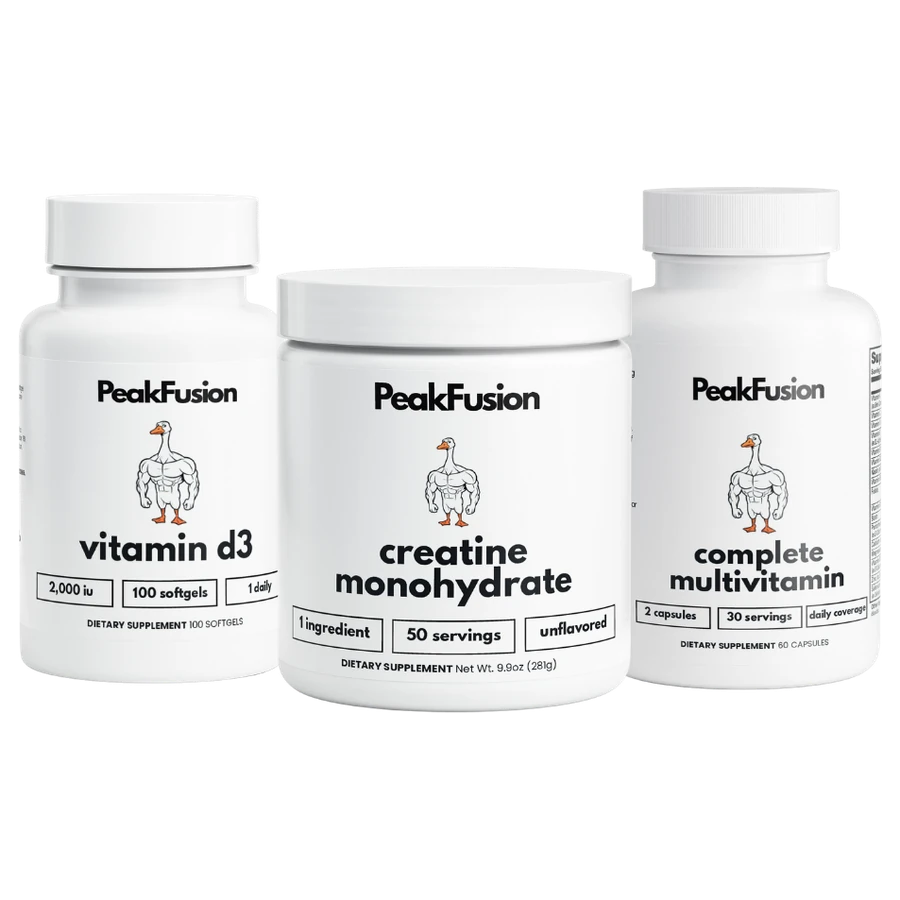
PeakFusion Creatine Monohydrate is 5 grams per serving, unflavored, and independently tested at 100.8% assay on Lot B25I013. No loading phase needed. The product page is here.
For more on creatine, read how long creatine actually takes to work and how creatine monohydrate compares with creatine HCl.
PeakFusion supplements are not intended to diagnose, treat, cure, or prevent any disease. Consult a healthcare provider before beginning any supplement. PeakFusion creatine is for adults 18 and older.


